
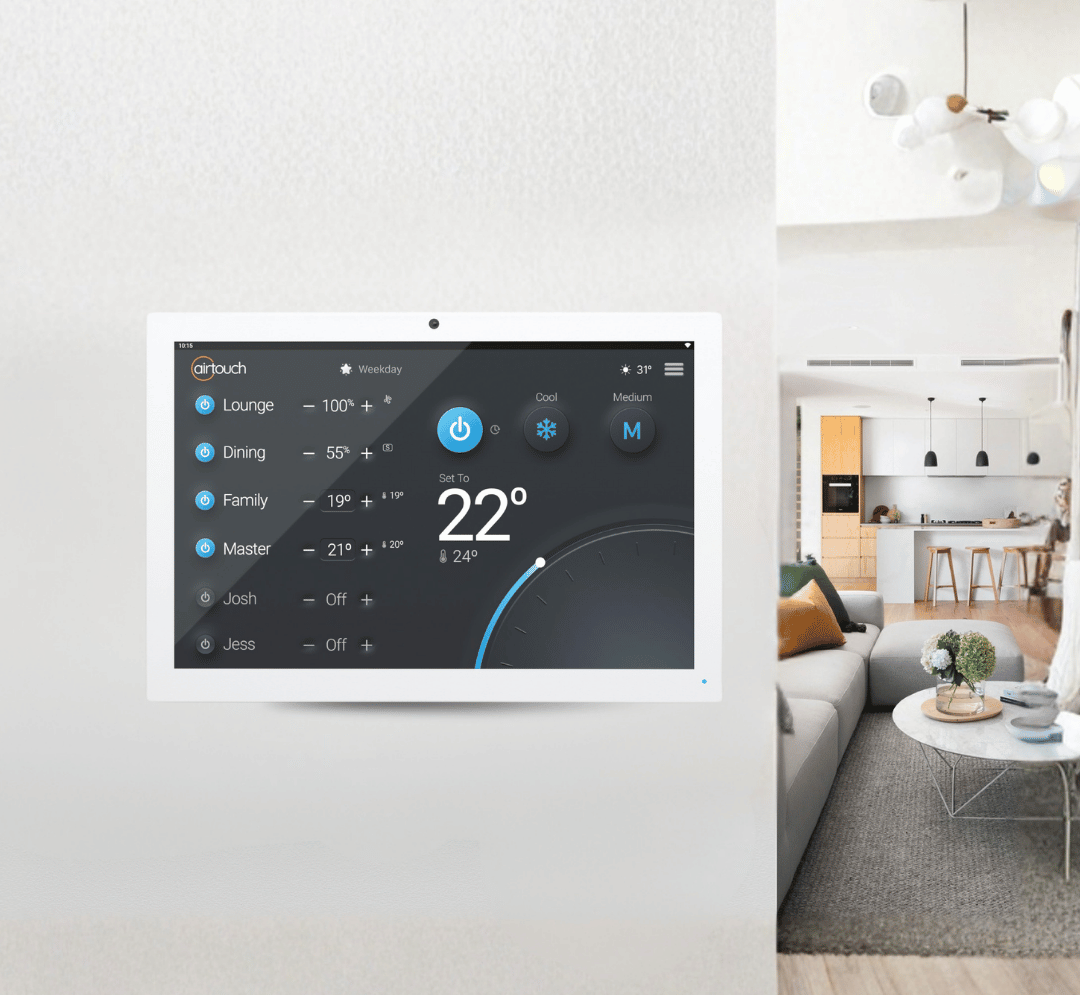
There is no single “best” way to use ducted zoning.
What works for a young family in a four-bedroom home may not suit a couple working from home or a larger property with a hot west-facing living area.
That is why good zoning starts with how the home is actually used.
At Allfield RACS, we design ducted reverse-cycle systems around layout, room size, airflow requirements and household routines rather than applying the same setup to every property.
Here are three examples of how different Perth homes might use zoning differently.
Home 1: The Busy Family Home
In a family home, the living areas often do most of the work during the day.
The kitchen, family room and play areas may need regular cooling, while bedrooms are used much less until later in the evening.
A sensible zoning setup might give more airflow to those shared spaces during the day, then shift the focus towards the bedrooms at night.
The key is not simply switching everything else off.
The system still needs enough open airflow to operate properly, so zoning should reduce unnecessary cooling without restricting the system too much.


Home 2: The Work-From-Home Setup
A couple working from home may use the house very differently.
Instead of cooling the whole property all day, the office or study may be the priority during business hours.
Later, the living area becomes more important, followed by the bedrooms in the evening.
Smart zoning can make this easier by allowing different areas to run at different times without constant manual changes.
For households with changing daily routines, scheduling can be one of the most useful parts of a modern zoning system.
Home 3: The West-Facing Perth Home
Some homes have a different challenge altogether.
A large west-facing living area can absorb a lot of afternoon heat, especially if it has big windows or sliding doors.
That zone may need more airflow later in the day than a shaded bedroom on the opposite side of the house.
In this situation, good zoning is not just about which rooms are occupied. It is also about how much heat each part of the home is dealing with.
Room orientation, glazing, insulation and afternoon sun all affect cooling demand.
Why the Same Settings Do Not Work for Every Home
This is where zoning becomes more than a simple ON/OFF feature.
A well-designed system should reflect:
How rooms are used
How many outlets are in each zone
Which areas receive more sun
How airflow moves through the system
When different spaces are occupied
Two homes with the same number of bedrooms can still need very different zoning strategies.
That is why copying someone else’s settings is rarely the best approach.
What Good Zoning Should Feel Like
You should not have to fight with the controller all day.
Good zoning should make the home feel more balanced, with cooling directed where it is needed without creating obvious hot and cold spots.
If one room is always too warm, another is too cold or the system seems to struggle when certain zones are closed, the issue may be with airflow balance, ductwork or the original zone design.
That is when it is worth looking beyond the controller itself.
Zoning Designed Around Your Home
At Allfield Residential Air Conditioning Services, we design and install ducted reverse-cycle air conditioning around the way Perth homes are actually used.
We can also help with smart zoning, airflow issues and upgrades to existing ducted systems.
If your current setup feels difficult to manage or some rooms never seem comfortable, we can assess the system and help work out a better approach.
Want to get more from your ducted zoning?
Contact Allfield RACS for practical advice on ducted air conditioning and zone control in Perth.