
An air conditioner that gives up on a 40-degree afternoon is miserable. Before you panic, a handful of quick checks solve more problems than you’d expect. Others are your system’s way of telling you to stop and call a professional.
Here’s a simple guide to the most common problems we see in Perth homes, what you can safely look at yourself, and where DIY should end.
A quick safety note first
Only do what’s described here: remote controls, filters, vents, outdoor clearance and the switchboard. Never remove panels, touch wiring or try to deal with refrigerant. Those jobs need a licensed technician, and interfering with them can void your warranty.
“It won’t turn on at all”
- Check the remote. Flat batteries and a changed mode are the most common culprits. Try fresh batteries.
- Check the switchboard. If the air conditioner’s circuit breaker has tripped, switch it back on once. If it trips again, leave it off.
- Look for a power interruption. A storm or brief outage can leave a system sitting in standby.
- Check the wall controller (ducted systems). Make sure it’s on, set to the right mode and not showing a lock or fault message.
Call us if: the breaker keeps tripping, the display is blank with power confirmed, or you hear clicking but nothing starts.

“It’s running, but the house isn’t cooling”
This is the big one in a Perth summer.
- Confirm the mode and temperature. It’s easy to leave it on fan or heat, or set a target the room is already at.
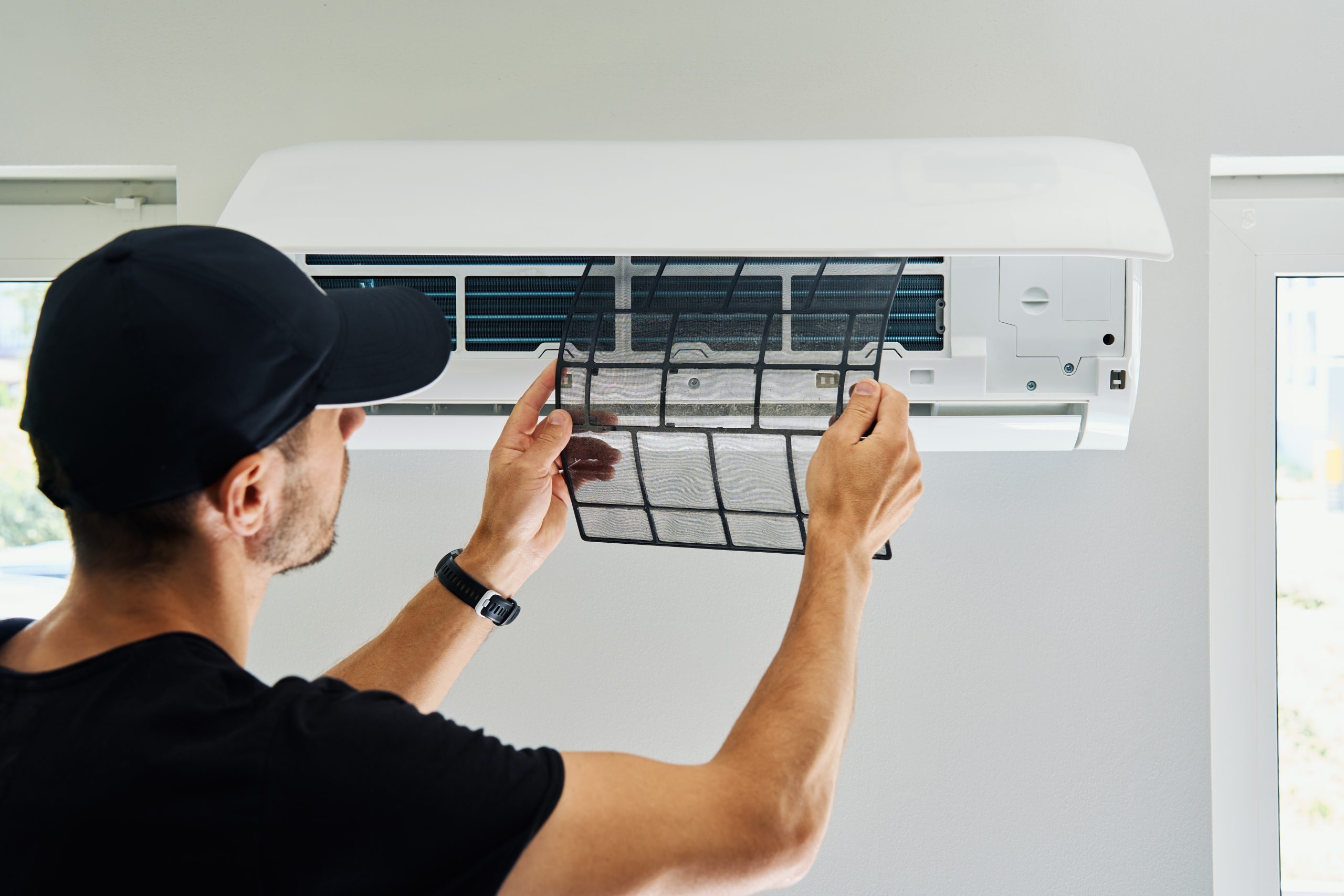
- Clean the filters. Clogged filters are one of the most common causes of weak airflow.
- Check the vents. Make sure supply vents and return-air grilles aren’t blocked by furniture, and that the zones you want are open.
- Look at the outdoor unit. Leaves, rubbish or stored items packed against it stop it releasing heat.
- Think about the day. On extreme days, a system working properly can still struggle against a heat-soaked house. Close curtains early and give it time.
Call us if: airflow is weak even with clean filters, some rooms never cool, or the system runs constantly without ever reaching temperature.

“It’s blowing warm air”
If a system is meant to be cooling and isn’t, first check it’s actually set to cool, then check filters and outdoor clearance as above. Some systems also pause briefly after switching on, so give it five to ten minutes.
Call us if: it’s still warm after that, particularly if airflow seems normal. That can point to a refrigerant, compressor or controls issue, which only a licensed technician should assess.
“There’s ice on the unit or pipes”
Ice means something is restricting airflow or heat transfer. Switch cooling off, set the system to fan only so it can thaw, and check the filters.
Call us if: ice returns after thawing. Repeated freezing often points to a deeper fault, and running it through that can damage the system.
“Water is leaking inside”
A leak from an indoor unit is usually a blocked or poorly draining condensate line. Switch the system off to stop it making things worse, and protect floors and furniture.
Call us promptly. Water near electrical components isn’t something to leave.
“It’s making strange noises or smells”
- Rattling or buzzing: Often loose panels or debris near the outdoor unit. Check for obvious clutter outside, but don’t open anything.
- Grinding or squealing: Switch off and call us.
- Musty smell on start-up: Often built-up moisture or dirty filters.
- Burning smell: Switch the system off at the isolator and call immediately.
“There’s an error code”
Check your manual to see what the code means. It’s a useful clue to give us. Don’t keep resetting the system hoping it’ll clear.

Prevent most of this
Clean filters regularly through summer, keep the outdoor unit clear, and book a service before the hot weather rather than during it. Because everyone’s air conditioner fails at the same time during a heatwave, early servicing is usually the easiest fix.
Need a hand?
If you’ve worked through the checks and your air conditioner still isn’t right, our Perth team can diagnose and repair ducted and
wall-mounted split systems. We’ll explain what’s wrong in plain English before any work begins.